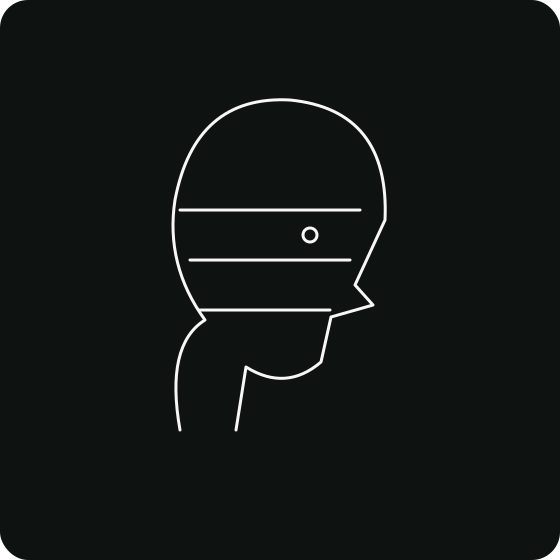
What you marked on the map is gathered here. Add anything it cannot hold: a family likeness, a scar, the lines that come from laughing.
Requesting a reflection sends your input and any saved portrait summary through More Motion to Anthropic. Local tools and browser-saved copies stay on this device. Privacy details.
at rest
the face you describe is a self-portrait in another vocabulary.
Optional: use your camera as a mirror
If it helps you see, look at your face in the glass. The image stays on this device and is not kept, and nothing here analyses it.
held readings
Saved copies are kept in this browser. Requested readings are processed online. Releasing these readings also clears their recent follow-up context when it came from this room.
ask the signal
Your question is sent through More Motion to Anthropic. A recent reading is included as context when available and can follow you across rooms in this tab for up to ten minutes. Clear it using Clear recent context.
what the sources actually said
Verbatim extracted claims from the truth-gated research corpus, grouped by theme. The quiet meter beside each claim is the recorded confidence that the source asserted it; it is a record of the literature, not an endorsement.
the full research report
The complete report from this discipline's research run, carried verbatim.
open the report
sources
Everything in this room is a traditional symbolic lens, presented as exactly that. Confidence here means a source asserted it, not that it is true. Readings are reflections, not predictions. Local tools run in your browser. Requested online reflections send your input through More Motion to Anthropic. Any saved portrait summary is included with a reflection; follow-up questions also send the recent reading while recent context is available. How your data is handled.